Sunday, November 9, 2008

NYT's McCarthyist Witchhunt on Studs' Memory


Studs Terkel would have been appalled, but not surprised by the degradation of his memory in the obituary pages of corporate media over the past weeks.

In particular, Edward Rothstein's McCarthyist rantings in the "liberal" New York Times drew the eyer of radical historian Howard Zinn at the Progressive Online.

What's Wrong with a Fairness Doctrine?


The Fairness Doctrine has had a constant presence in the U.S. press lately. The little used requirement was abolished from the law books during the Nixon Administration. Many blame its abolition for the rise of far right wing partisan coverage, in the form of "shock jocks" across the airwaves.

The Fairness Doctrine demanded stations allow for counterpoints to be aired. This legislation, if implemented properly, would allow for the broadening of discussion and limiting of possible court action.

But with the Bush administration on the way out, shock jocks everywhere have been sent into a tizzy over the possible reintroduction of such legislation.

Will it happen? Probably not! But it certainly gives the right wingers a chance to hold onto their belief in free speech- that being the right to lie without repercussions, in a time of waning power.

Gore: Use Net to Save World

A big part of my project here at MediaVigilante is to start thinking about how the media can be used as a platform to promote discussion necessary for change.

After Obama's recent win, many will be expecting, possibly unreasonably that he is able to make the changes many people are expecting.

On the back of this, Al Gore has used his speaking engagement at a Web2.0 conference to stress the importance of using the internet in creating some of that discussion.

Wednesday, November 5, 2008

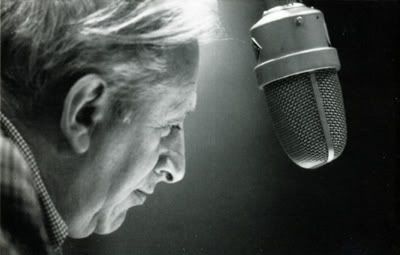
'Studs' Terkel Will Be Missed


Man of the millions, legendary Pulitzer Prize winning U.S. broadcaster and author, Louis "Studs" Terkel passed away on October 31 at age 96.

Terkel became best known for his interviews chronicling some of America's hardest years, through the eyes of the working masses.

His approach of amplifying the voices of the voiceless was an essential part of his various radio shows, plays, tv shows and books including Hard Times: An Oral History of the Great Depression (1970) and Working (1974).

His work became so synonymous with the struggle for a better world that he drew the eyer of authorties during the McCarthyist, anti-communist witch hunts during the 1950's. NBC chose to cancel his popular, but short lived, television show, Studs' Place, after he refused to say he was duped into signing political petitions by the Communist Party.

Studs represented a kind of journalism that has become a rare commodity in today's media environment. Never afraid of his radicalism, Terkel became a man dedicated to another vision of not only his own profession, but to the world as a whole.

He will be missed.
Saturday, November 1, 2008

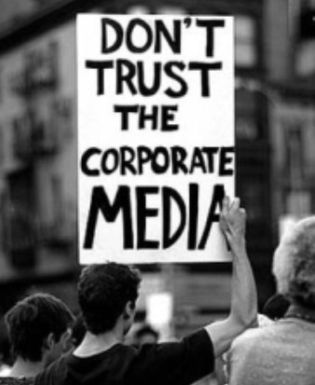
Radical Representation and Media Reform

In White Liberals, Glass Houses and the Black Radical Journalism Tradition, Jared A. Ball goes into what he sees as some of the faults of the Media Reform movement.

Particularly perking his gaze is the movement's failure to advocate for the representation of contemporary radical views, especially African American latter day radicals.

While the problems of the movement are not always understood by some of its well meaning participants, the call for a balanced collaboration is one that must be taken on if our movement is to truely gain the respect and involvement of all sectors of society.

Friday, October 31, 2008

Cuban "Journos" and the Secret Golden Handshake

As anyone who truly understands the media would understand, journalism is a loaded profession. If you are to fight for the rights of all journalists, you will inevitably come into conflict with your own belief in human rights.

This could not be more true of a country like Cuba, where some partisan "independent journalists" have been funded by U.S. organisations openly campaigning for the violent overthrow of the Communist regime.

As Legendary PBS broadcaster Bill Moyers explained in a 2003 interview,

"...the very concept of media is insulting to some of us within the press who find ourselves lumped in with so many disparate elements, as if everyone with a pen, a microphone, a camera, or just a loud voice were all one and the same...David Broder is not Matt Drudge. "Meet the Press" is not "Tempation Island." And I am not Jerry Springer. I do not speak for him. He does not speak for me. Yet 'the media' speaks for us all"

Read more in Sydney based Academic Tim Anderson's report for Green Left Weekly

There's also an interesting piece on Cuban Journalism at Project Censored, and some other interesting observations here and here

Friday, October 3, 2008

Understanding the media filter

In Keeping the Media Safe for Big Business, Media Lens adds to the discussion surrounding the way the media is run to benefit some and ignore/attack/trivialise others. Also addressed is how journalists become a part of this system, often without their own knowledge.
The debate builds on the works of Chomsky and Hermann in their landmark book, first published in 1988, Manufacturing Consent. The work aims to show the media is controlled in western democracies, without the need for any sinister conspiracy theories.